In November 2015, Pope Francis stood before a Muslim congregation in Bangui and declared: "We worship the same God." Presidents Bush and Obama said it. The Archbishop of Canterbury implied it. These are not fringe statements — they represent the mainstream Western response to one of the most consequential theological questions of our time. But the question has a real answer, grounded in primary texts. And the answer changes everything about how the church engages with the world's two billion Muslims.
Why This Question Matters
This is not an academic exercise for seminary classrooms. It is a missional question with a direct, practical consequence. If a Christian genuinely believes that Muslims already worship the true God under a different name, there is no reason to share Christ with them — no more reason than there would be to evangelise a fellow believer. The same-God claim, however kindly intended, has quietly closed more Christian hearts to Muslim mission than almost any other idea circulating in the Western church today.
I have spent sixty years among Muslim people — as a pastor, a missionary, and a friend. I did not arrive at my answer to this question from a position of hostility. I arrived at it from proximity: from reading the texts both communities actually hold as authoritative, and from watching what happens, for good and for ill, when the question is answered wrongly.
What Western Leaders Have Said — and Why
The instinct behind statements like Pope Francis's is not malicious. It comes from a desire for peace, for common ground, for de-escalation in a tense and often violent world. Vatican II's 1965 declaration Nostra Aetate described Muslims as those who "adore the one God," and that language has shaped much of mainstream Christian and political rhetoric since. It is a diplomatically useful sentence. It is not, on the evidence of the primary texts, an accurate one.
What the Quran Claims
The Quran does use the name Allah for the God of Abraham, and in Surah 29:46 instructs Muslims to tell the People of the Book: "Our God and your God is one." Taken alone, that verse appears to settle the matter in favour of a shared God. But a single verse read apart from the rest of the Quran's teaching about who that God is, and apart from the Bible's own account of who YHWH is, tells us very little. The real question is not whether the same word is used. It is whether the being described by that word in each tradition's own authoritative texts is the same being, with the same character, making the same claims.
Key Difference One: The Trinity versus Tawhid
Islam's doctrine of tawhid — the absolute, undivided oneness of Allah — treats the Christian confession that God is Father, Son, and Holy Spirit as the gravest possible theological error. The Quran states plainly that associating partners with Allah, shirk, is the one sin Allah will not forgive (Surah 4:116). The Trinity is not a minor variation between two versions of the same God. It is, in Islamic terms, the central disqualifying claim — the thing that places Christian worship outside the bounds of true monotheism, in the Quran's own account of itself.
Key Difference Two: Love as Defining Character
The New Testament does not merely say that God loves. It says God is love (1 John 4:8) — that love is not one attribute among many but the defining nature of who he is, extended unconditionally, even to his enemies (Romans 5:8). Classical Islamic theology describes Allah rather differently. Al-Ghazali, the most authoritative theologian in Sunni Islamic history, summarised Allah's disposition toward humanity this way: "These to bliss, and I care not. And these to the fire, and I care not." Allah's favour in the Quran is consistently conditional on obedience and submission; nowhere in the Quran or the classical tradition is Allah described as loving those who reject him in the way the Bible describes God's love for a rebellious humanity.
Key Difference Three: Covenant Relationship versus Submission
The Bible's account of God's dealings with his people is covenantal — a binding, relational commitment in which God calls his people sons and daughters (Romans 8:14-16, Galatians 4:6-7). Islam's central term for the right relationship between a person and Allah is islam itself — submission. A servant submits to a master. A child is adopted into a family. These are not two cultural expressions of the same relationship. They describe fundamentally different kinds of beings relating to fundamentally different kinds of worshippers.
Key Difference Four: Who Is Jesus?
Perhaps no difference is more decisive. The Quran honours Jesus — Isa — as a prophet and messenger, born of a virgin, and even as the Messiah (Surah 3:45). But it explicitly denies his divinity (Surah 5:72-75), denies the Trinity (Surah 4:171), and denies his crucifixion (Surah 4:157-158). The Jesus who died for sin and rose from the dead — the Jesus the entire New Testament is written to testify to — is not the Jesus of the Quran. A God who sent his Son to die for sinners and a God who, in Islamic teaching, would never allow his prophet to be crucified at all, cannot be described as making identical claims about the central event of each tradition's account of salvation.
What Those Who Have Lived Inside Both Traditions Say
The most credible voices on this question are rarely Western theologians working at a distance. They are men and women who were raised as devout Muslims and later came to faith in Christ — among them the late Nabeel Qureshi, whose own account of wrestling with precisely this question shaped a generation of apologetics conversation, and Daniel Shayesteh, an Iranian former jihadist turned Christian minister. Those who have stood inside both systems of belief, rather than observing from outside either, consistently describe the move from Islam to Christianity as a move between two different conceptions of God — not a change of label for the same reality.
Why the Answer Is Missional, Not Merely Academic
None of this is offered as a weapon against Muslim people. The distinction matters for exactly the opposite reason: because Muslims are not already worshipping the true God under a different name, they have not already received what the gospel offers. If the church settles for the comfortable fiction that the difference is only semantic, it will not do the one thing it is actually commanded to do — go to the two billion people shaped by this tradition and offer them Christ. Getting the theology right is not pedantry. It is the precondition for taking mission among Muslim people seriously at all.
The Invitation
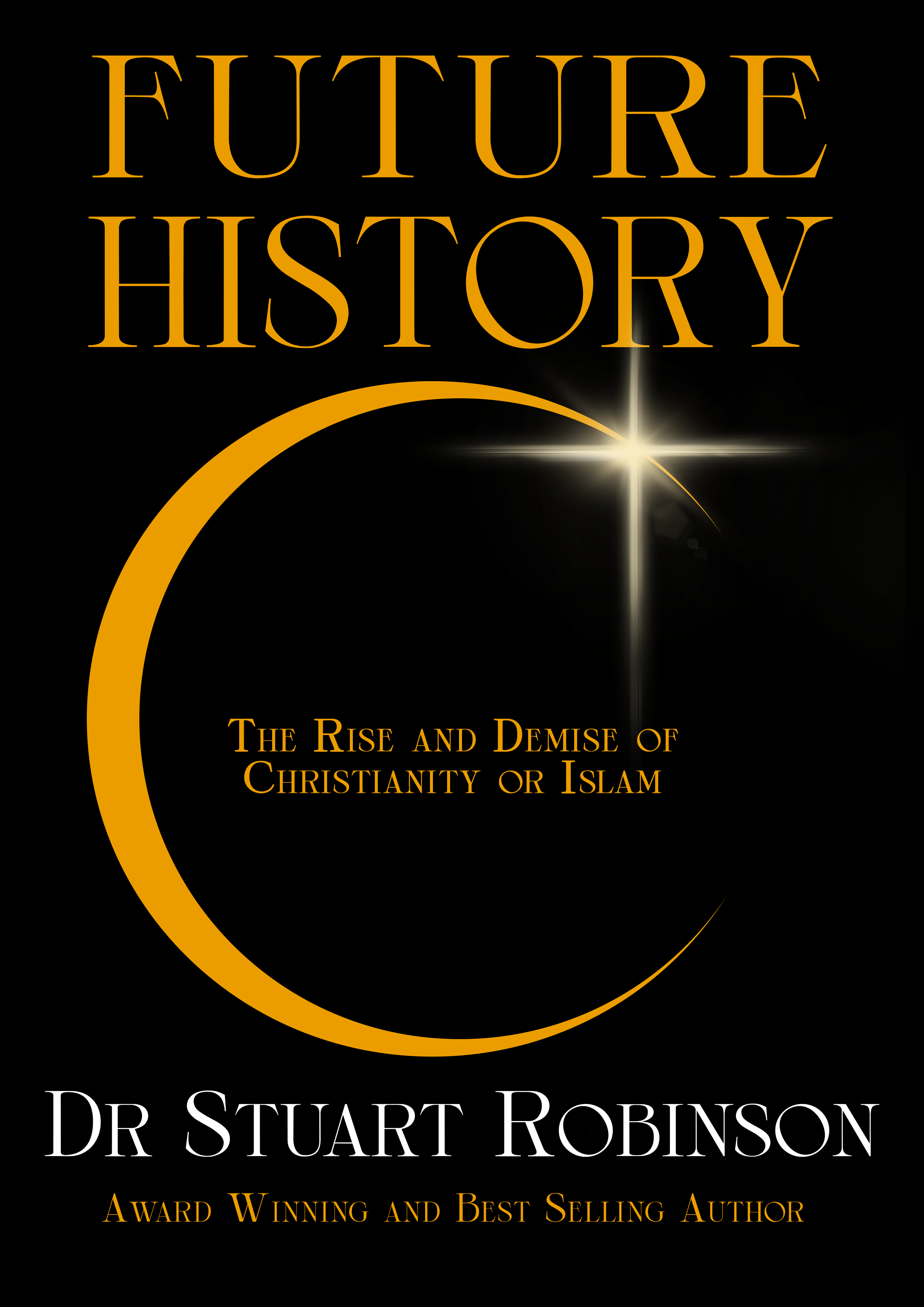
Understanding this difference clearly is not the end of the conversation. It is the beginning of a better one — one built on honesty about what each tradition actually teaches, rather than on a diplomatic blurring that serves no one well, least of all the Muslim neighbour who deserves to be told the truth in love. That is the summons behind Future History, and it is the summons behind sixty years of ministry among Muslim people: not contempt, and not false equivalence, but truth spoken in love, and the courage to go.